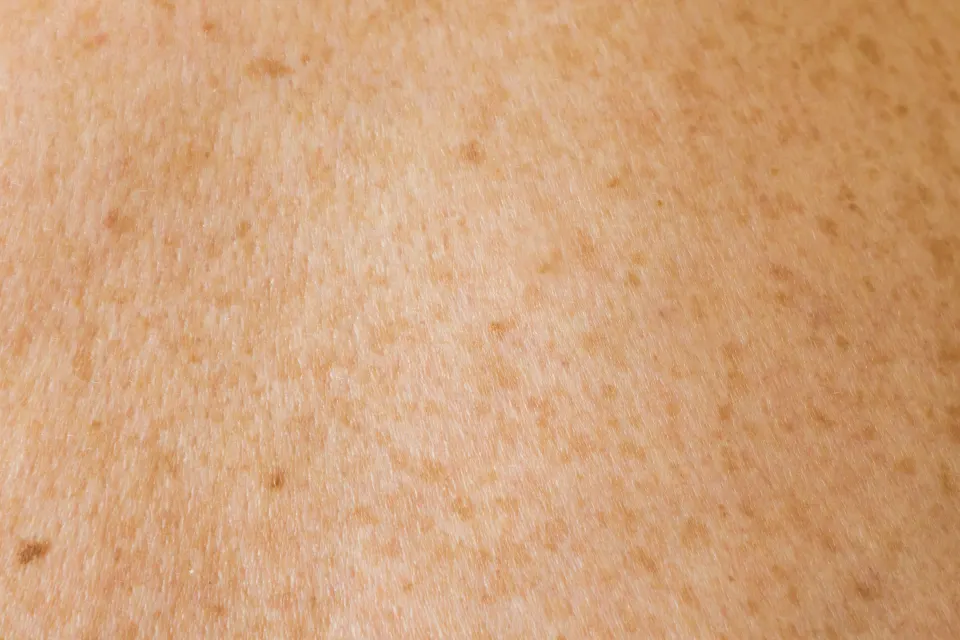
Who a skin check is for
DC Medical Centre's GPs assess spots, moles and other skin lesions that worry you. New and existing patients can book an in-person appointment.
Don't wait for a routine check if a spot changes. Book an appointment if you notice:
- a new mole or spot
- a mole that changes in size, shape, colour or height
- a sore that does not heal
- a spot that bleeds, crusts, itches or looks different from your other spots
Some skin cancers don't follow the usual mole patterns, so any spot that worries you is worth discussing.
Which appointment to book
| What you need | Book | Fee | You pay with Medicare |
|---|---|---|---|
| One spot, mole or skin concern | Standard (15 min), in person | $94 | $49 after a $45 rebate |
| Several spots, or a broader examination | Tell reception when you book. More time or a follow-up appointment may be needed |
These are DC Medical Centre's fees as of 1 October 2026. GPs at DC Medical Centre work as independent practitioners and may vary their fees. The Fees page is always the current list.
A skin check is a visit to the clinic. Book it online.
What to bring
- Your Medicare card, or your insurance details if you don't have Medicare.
- Notes about your spots: when each one appeared, how it has changed, and whether it bleeds, itches or hurts.
- Your history: any previous skin cancers, and any family history of melanoma.
- Your medicines: a list of what you take.
- Clothes that make it easy to show the area of concern.
What happens on the day
The extent of the examination depends on why you came, what the GP finds and how long your appointment is.
- You talk about the concern. Your GP asks about your symptoms, sun exposure, and your personal and family history.
- The GP examines your skin. They look at the spot or area you came about. They may use a dermatoscope, a magnifying light that shows a spot in more detail. They may suggest a broader skin examination if appropriate.
- You agree on next steps. Options may include keeping an eye on the spot, a biopsy or removal, treatment, or a referral to a dermatologist or another specialist.
You can raise any concerns about privacy, and ask for a chaperone where one is available.
If a biopsy or removal is recommended
If a spot looks suspicious or can't be assessed by looking at it alone, your GP may recommend a biopsy. Depending on the spot, this may mean taking a small sample or removing the whole spot. The sample goes to a pathology laboratory.
- It may not happen on the day. A procedure may be done during your appointment if suitable, or booked separately. Whether it can be done at the practice depends on the spot, the equipment, the practitioner and appointment availability. You may need a separate procedure appointment or a referral.
- You are told about costs first. Additional fees may apply for a biopsy, excision, dressings or pathology. Your GP explains the procedure and any known practice fees and asks for your consent before going ahead. You can ask about likely Medicare rebates and any separate laboratory charges. Laboratory fees, if any, are set by the pathology provider.
- Results take time. How long depends on the laboratory and the sample. When results of a test ordered by a DC Medical practitioner arrive, we send you a text inviting you to book a follow-up, whether the result is normal or not. Don't assume no news means a normal result. If you haven't heard from us when you expected, call the practice. See Results.
What it costs and who pays
| Your situation | What you pay for the consultation |
|---|---|
| Medicare card holder | $94 for a Standard consultation. You pay at the end of the visit, we submit your Medicare claim, and your $45 rebate usually reaches your bank account within 1 to 2 business days. You pay $49 |
| No Medicare (OSHC, visitor cover, tourist) | $94 for a Standard consultation, paid in full. We give you an invoice to claim from your insurer. We don't direct bill any OSHC or visitor insurer. See Seeing a GP without Medicare |
| Procedure, dressings or pathology | May cost extra. Your GP explains known costs before any procedure |
Medicare may pay a rebate for eligible GP consultations or procedures, depending on the item and your circumstances. There is no single Medicare-funded national skin screening program for everyone. If Medicare rejects your card or claim, private fees apply. Ask reception about fees and rebates before your visit.
We accept cash, Mastercard, Visa and AMEX.
How often to have a skin check
Australia has no population-wide skin cancer screening program and no single interval for everyone. Your GP can recommend a schedule based on your own risk. Risk is higher with previous skin cancers, a lot of sun exposure or sunburn, many or unusual moles, fair skin, a weakened immune system, or a family history of melanoma.
Between visits, get to know your own skin, including your scalp, back and the soles of your feet. Ask someone to check areas you can't see. Don't rely on a phone app to diagnose a spot.
Protecting your skin
Cancer Council says Australia has one of the highest rates of skin cancer in the world, and recommends sun protection whenever the UV level is 3 or higher. Its five steps are:
- Slip on covering clothing.
- Slop on SPF 50 or SPF 50+ broad-spectrum, water-resistant sunscreen.
- Slap on a hat.
- Seek shade.
- Slide on some sunglasses.
Booking
Book online. For questions, call reception on 02 9167 5760. We're at 13C Burton St, Darlinghurst, open Monday to Friday, 9am to 5:30pm, and closed on weekends and public holidays. More detail is on the Skin checks page.
In an emergency call 000. For health advice at any hour, call healthdirect on 1800 022 222.
Frequently asked questions
Book a Standard (15 minute) in-person consultation for a particular spot or concern. If you want a broader examination or have several spots, tell reception when you book; extra time or a follow-up appointment may be needed.
A Standard consultation is $94. With Medicare you get a $45 rebate and pay $49. Without Medicare you pay $94 and can claim from your insurer. A biopsy, excision, dressings or pathology may cost extra. Fees as of 1 October 2026.
Not necessarily. If your GP recommends a biopsy or removal, it may be done during your appointment if suitable, or booked as a separate procedure. It is not guaranteed as part of a Standard consultation.
There is no single interval for everyone in Australia. Your GP can suggest a schedule based on your personal and family history, sun exposure, immune status and what they find.
Some melanomas and other skin cancers don't show the usual ABCDE changes. Book an appointment for any spot that is new, changing, bleeding or not healing, or that worries you.
DC Medical is open Monday to Friday, 9am to 5:30pm. In an emergency call 000. For health advice at any hour, call healthdirect on 1800 022 222.
Sources
- Cancer Council: Sun safety (checked 19 November 2026)
- Cancer Council: Be SunSmart (checked 19 November 2026)
General information only, not medical advice for your situation. Your doctor will advise you at your appointment.


