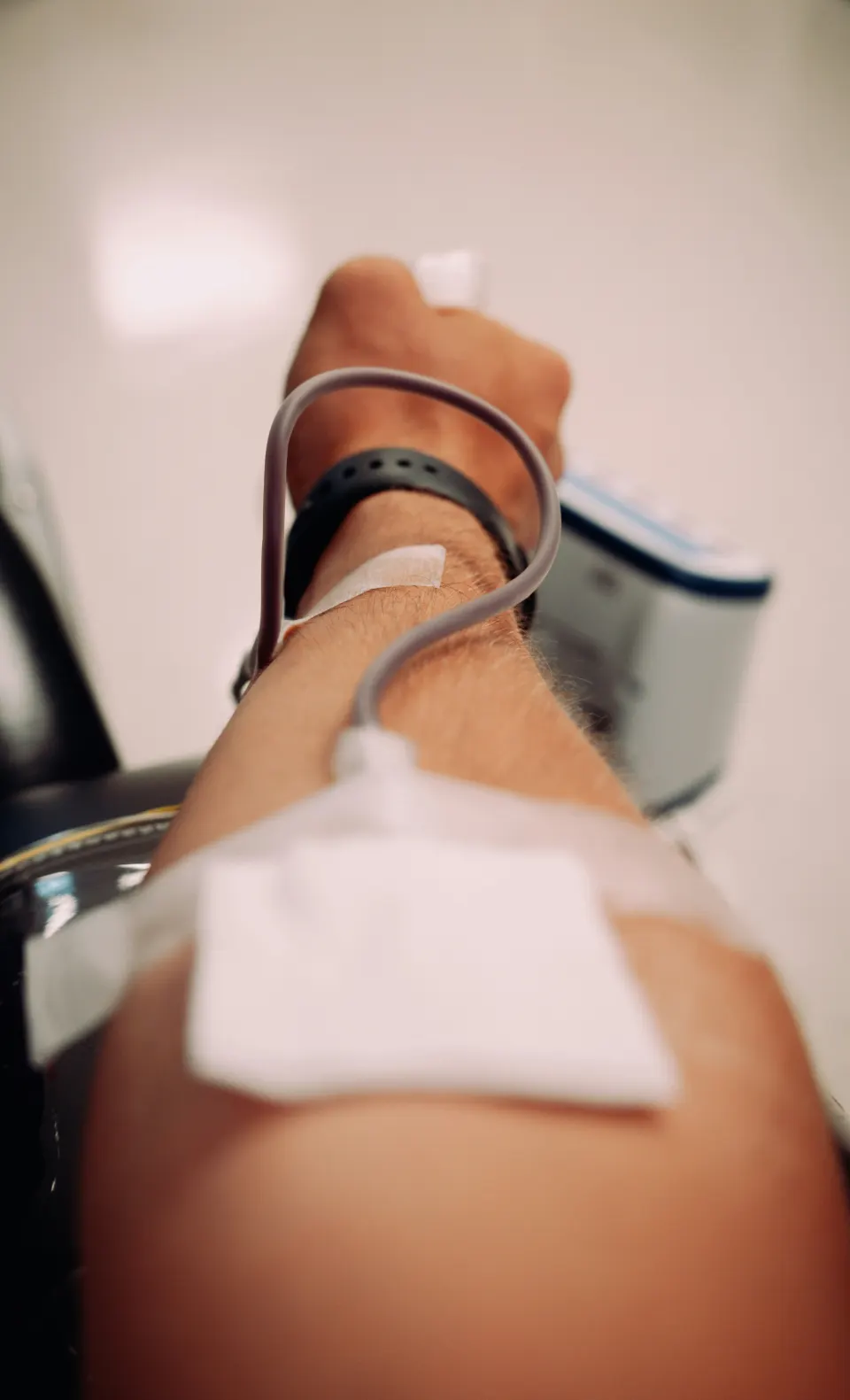
What an iron infusion is
An intravenous (IV) iron infusion gives iron directly into a vein through a small cannula. A practitioner may recommend it when laboratory-confirmed iron deficiency needs treatment and iron tablets haven't worked, aren't suitable, or can't restore iron stores quickly enough.
At DC Medical, the infusion is given only with a referral and a prescription from your practitioner. Our clinician reviews whether it is safe to go ahead before giving it. A referral doesn't guarantee an infusion.
What to bring: all four items
- Your prescribed iron medicine, supplied by your pharmacy in its original packaging and stored as directed.
- A practitioner referral stating the reason for treatment, the iron medicine prescribed and the dose.
- Your latest full blood count (FBC).
- Your latest EUC and iron studies, showing each of these:
| Marker | What it shows |
|---|---|
| Ferritin | Iron stores |
| Haemoglobin (Hb) | Whether you have anaemia |
| Creatinine | Kidney function |
| eGFR | Estimated kidney filtration |
Incomplete or out-of-date documents may mean an extra assessment, or that the infusion is postponed.
Cost
A procedure fee applies. It is shown on our Fees page, and like other nursing procedures it generally does not attract a Medicare rebate. The fee doesn't include the medicine: you buy it from your pharmacy with your prescription, and that cost is separate.
Who might not be able to have an infusion
An iron infusion may not be suitable if you have:
- a known allergy to the prescribed medicine, or a previous serious reaction
- iron overload
- anaemia that isn't caused by iron deficiency
These need individual medical review and may mean the infusion is delayed or declined:
- an active infection
- significant asthma or allergy history
- some liver and immune conditions
- pregnancy, especially the first trimester
Tell us about your medicines, pregnancy, infections and allergies before the infusion.
On the day
- Before: eat normally and arrive well hydrated, unless you've been told to limit fluids. If you have heart or kidney problems, follow your doctor's advice on fluids. Wear loose sleeves and bring a warm layer.
- During: the clinician checks your observations, inserts a cannula and gives the prescribed iron at the right rate for your medicine and dose. Tell staff straight away about pain, burning, swelling or colour change around the cannula. Iron leaking outside the vein can cause long-lasting skin staining.
- After: you're monitored for at least 30 minutes. Your prescriber plans any follow-up blood tests.
Side effects
Common or short-lived effects can include headache, nausea, flushing, dizziness, muscle or joint pain, a metallic taste and changes in blood pressure. Flu-like symptoms can start later. Serious allergic reactions are uncommon but possible: tell staff at once about chest discomfort, breathing problems, rash, swelling or feeling faint.
Some IV iron medicines can cause low phosphate levels, especially with repeat doses. See your doctor about unusual ongoing tiredness, muscle weakness or bone pain. For more, see healthdirect's iron infusion guide.
For referring practitioners
The referring practitioner remains responsible for the indication and the prescription. DC Medical reviews suitability before giving the prescribed treatment.
The referral must include:
- the clinical indication for IV iron, the product prescribed and the exact dose in milligrams
- the patient's weight, and any plan for split doses or repeat treatment
- allergies, previous IV iron reactions, relevant medical history, and the dates of the supporting pathology results
- the patient's and your identification and contact details, your provider number, and your dated signature
Safety screening to state on the referral:
- whether the patient is pregnant and, if so, the gestational age
- any history of heart failure or kidney failure
- any fluid restriction or special fluid management
- confirmation that you've discussed benefits, risks and alternatives, obtained consent and reviewed the necessary tests
Prescription: issue a valid prescription so the patient can buy the medicine from their pharmacy and bring it to the appointment.
Sending documents to us:
- Fax: 02 9058 8164
- Email: reception@dcmedical.com.au
- Secure messaging (EDI): dlhcmedc
- Phone: 02 9167 5760
Please also give the patient a copy of the referral and their pathology results to bring on the day. The patient books the Iron Infusion appointment online.
Booking
Select Iron Infusion when you book online. We're open Monday to Friday, 9am to 5:30pm, and closed on weekends and public holidays.
For trouble breathing, facial or throat swelling, collapse or other severe symptoms after an infusion, call 000. For health advice at any hour, call healthdirect on 1800 022 222.
Frequently asked questions
Yes. Bring a referral from your practitioner that states the reason for treatment, the iron medicine prescribed and the dose. You also need a valid prescription for the medicine.
Recent full blood count (FBC), EUC and iron studies, showing ferritin, haemoglobin (Hb), creatinine and eGFR. The referral should state the date of these results.
Yes. Bring the iron medicine prescribed for you, supplied by your pharmacy in its original packaging and stored as directed. Its cost is separate from the procedure fee.
Pregnancy, especially the first trimester, needs individual review by your prescriber and our clinical team. The infusion may be delayed or declined.
Yes. Missing documents or medicine, an unsafe clinical history or an unsuitable dose may mean the infusion can't go ahead on the day.
For trouble breathing, facial or throat swelling, collapse or other severe symptoms, call 000. For persistent side effects, contact your doctor. For health advice at any hour, call healthdirect on 1800 022 222.
Sources
- healthdirect: Intravenous (IV) iron infusion (checked 19 November 2026)
General information only, not medical advice for your situation. Your doctor will advise you at your appointment.


